The Best Plants for Southeastern Pennsylvania Gardens and Landscapes

Understanding SE Pennsylvania’s Growing Zones Most of the properties we work on across Montgomery, Bucks, Chester, Delaware, Lehigh, Berks, and Philadelphia Counties fall into USDA Hardiness Zone 6b or 7a. Knowing which zone you are in changes which plants survive your winters and which ones s...

Understanding SE Pennsylvania’s Growing Zones

Most of the properties we work on across Montgomery, Bucks, Chester, Delaware, Lehigh, Berks, and Philadelphia Counties fall into USDA Hardiness Zone 6b or 7a. Knowing which zone you are in changes which plants survive your winters and which ones struggle.

Zone 6b covers the northern and inland portions of our service area. Minimum winter temperatures run between negative 5 and 0 degrees Fahrenheit. Boyertown and Bally in northern Berks County sit squarely in 6b, as does Center Valley in Lehigh County and much of upper Montgomery County. If you are in those locations, plan your selections around 6b minimums. A plant rated to Zone 7 that survives winters in Ardmore may not make it through February in Boyertown.

Zone 7a pushes closer to Philadelphia and along the Delaware River corridor, where minimum temps stay between 0 and 5 degrees. Delaware County and much of Philadelphia trend toward 7a. The urban heat island effect in dense Philadelphia neighborhoods can push effective hardiness toward 7b in practice.

Beyond the number, what actually kills plants here is the freeze-thaw cycle through late winter and early spring. Temperatures swing above and below 32 degrees repeatedly, heaving roots out of the ground and breaking dormancy too early. Factor that in when you read any hardiness rating on a plant tag.

Soil Types Across Our Service Area

Hardiness zone tells you what temperatures a plant can survive. Soil type tells you whether it can actually establish and thrive. In Southeastern PA, soil type often matters more than zone for long-term plant performance.

Worsham series. Found in low-lying areas throughout the region. Seasonally wet, heavy clay, drains poorly. Stays saturated for extended periods after rainfall and can be anaerobic in the root zone. Design choices for Worsham sites: raised beds, drain tile, or plants genuinely adapted to wet conditions such as Ilex glabra, Buttonbush, swamp milkweed, and native sedges.

Conshohocken Loam. The moderate clay soil on most residential lots in Montgomery and Chester Counties. Better than Worsham on drainage but still prone to compaction and slow infiltration. The failure mode is planting too deep or in a bowl-shaped hole that pools water at the root ball.

Cecil sandy loam. Found on upland, well-drained sites. Most forgiving for a wide range of plants. Drought stress can be a concern in July and August; supplemental irrigation helps during establishment.

Manor soils. Shale-derived soils on slopes in Chester and Montgomery Counties. Shallow to bedrock in places, lower organic matter, faster drainage. Well-suited to native perennials adapted to lean, well-drained conditions.

Baxter soils. Limestone-derived, found in northern Chester and Montgomery Counties. Higher pH than most regional soils, which affects nutrient availability for acid-preferring plants like rhododendrons and azaleas.

A Seasonal Plant Performance Guide for SE PA

A complete planting plan designs for four seasons, not just summer.

Spring: Late March to May

The spring planting window opens in late March to May. Early spring is dominated by woody plants coming into bloom before leaves emerge.

  • Eastern redbud (Cercis canadensis). Magenta-pink bloom in April covers bare branches before leaves emerge. Tolerates a range of soil conditions, performs in zone 6b through 7a. Native to PA.
  • Serviceberry (Amelanchier spp.). White bloom in late March to early April. Edible berries follow in late May that birds take immediately. Tolerates clay and wet conditions well.
  • Native cherry (Prunus serotina and P. virginiana). White flower clusters in late April to May, important early food sources for native bees. Note: Prunus is a documented secondary host for Spotted Lanternfly; monitor and remove egg masses if present.
  • Switchgrass (Panicum virgatum). Grasses emerge in late April. ‘Shenandoah,’ ‘Northwind,’ and ‘Heavy Metal’ are widely used cultivars. Deer avoid switchgrass reliably. Cut back in late February before new growth appears.

Summer: June to August

Summer brings heat (average July high of 88 degrees Fahrenheit), humidity, and roughly 46 inches of annual precipitation. Japanese beetle grubs are active in soil from late June through August; all pesticide applications in Pennsylvania must be performed by or under supervision of a licensed PA pesticide applicator.

  • Purple coneflower (Echinacea purpurea). Long-blooming July through September, drought-tolerant after first season, largely avoided by deer. Leave seed heads for goldfinches through winter.
  • Black-eyed Susan (Rudbeckia hirta). Blooms July through September, tolerates Conshohocken Loam clay, handles dry spells, and self-seeds reliably.
  • Feather reed grass (Calamagrostis x acutiflora). ‘Karl Foerster’ produces upright feathery plumes from June through winter. Tolerates clay soils. Deer largely avoid it.
  • Wild bergamot (Monarda fistulosa). Lavender-pink blooms June through August, excellent pollinator value, more mildew-resistant than ornamental bee balm hybrids. Native throughout our region.

Fall: September to November

Fall planting runs mid-September through mid-November for most trees, shrubs, and perennials. Fall is actually preferable to spring for establishing woody plants because soil temperatures remain warm after air temperatures drop, promoting root establishment without summer heat stress.

  • Amsonia hubrichtii. Fine-textured foliage turns golden yellow in October and holds. Pale blue flowers in spring are a bonus. Deer avoid it consistently.
  • Switchgrass ‘Shenandoah’ (Panicum virgatum). Turns deep burgundy red in September and holds that color through November.
  • Virginia sweetspire (Itea virginica). Reliable orange to red fall color, white fragrant flowers in summer, tolerates wet clay soils better than almost any other ornamental shrub.
  • Fothergilla (Fothergilla gardenii or F. major). Extraordinary fall color ranging from yellow to orange to red on the same plant. Performs reliably in zones 5 through 9.
  • Turtlehead (Chelone glabra or C. lyonii). Late-blooming native for moist to wet Worsham clay sites. Pink or white flowers August through October.

Winter: December to February

The ground in Southeastern PA typically freezes mid-December and thaws by early March. A property that goes visually flat in winter is a plan that was not finished.

  • Winterberry holly (Ilex verticillata). Dense red berry clusters October through January. Requires a male pollinator within 50 feet. ‘Winter Red’ and ‘Red Sprite’ are reliable females. Tolerates wet clay soils.
  • Japanese plum yew (Cephalotaxus harringtonia). Dark green evergreen for shade with outstanding deer resistance. One of the most underused structural evergreens in our region.
  • Japanese cryptomeria (Cryptomeria japonica). Evergreen conifer with cinnamon-colored bark. Performs reliably in zones 6b through 7a. Provides vertical winter structure and screening.
  • Ornamental grass seed heads. Switchgrass, little bluestem (Schizachyrium scoparium), and prairie dropseed (Sporobolus heterolepis) hold their seed heads through winter. Do not cut back until late February to early March.

Native Perennials That Thrive Here

I favor native perennials not because they are fashionable but because they are genuinely easier to maintain once established and they support local insects and birds in ways that ornamental imports do not.

  • Black-eyed Susan (Rudbeckia hirta): Tolerates clay, handles summer drought, blooms from July through September, and holds up against deer pressure better than most. Spreads by self-seeding.
  • Purple coneflower (Echinacea purpurea): Long-blooming, drought-tolerant after its first season, and the seed heads feed goldfinches through fall and winter. Deer largely leave it alone.
  • Wild bergamot (Monarda fistulosa): Lavender-pink blooms from June through August, excellent for pollinators, and more mildew-resistant than its bee balm cousins.
  • Asters (Symphyotrichum spp.): Late-season bloom when most perennials are fading. New England aster and smooth aster both perform well here. Critical for migrating monarchs and native bees in fall.
  • Goldenrod (Solidago spp.): Unjustly blamed for hay fever (ragweed is the actual culprit). One of the highest-value pollinator plants in the region. Named cultivars like Solidago rugosa ‘Fireworks’ stay well-behaved in a border.
  • Native ferns (Osmunda, Athyrium, Dryopteris): Structural backbone for shaded and partly shaded beds. Deer avoid them, and most tolerate the clay-heavy soils common in Montgomery and Chester Counties.

Native Shrubs for Structure and Privacy

Perennials give you color and texture. Shrubs give you the bones of a garden. These native species do both while requiring minimal intervention once established.

  • Inkberry (Ilex glabra): Evergreen, deer-resistant, tolerates wet feet and clay. Grows 5 to 8 feet. ‘Shamrock’ and ‘Compacta’ are tidier cultivars for formal settings.
  • Arrowwood viburnum (Viburnum dentatum): White flower clusters in late spring, blue-black berries in fall, reliable fall color.
  • Blackhaw viburnum (Viburnum prunifolium): Larger than arrowwood, with a more tree-like form at maturity. White spring blooms, edible blue-black fruit, and excellent fall color.
  • Spicebush (Lindera benzoin): Thrives in part shade and moist soil. Early yellow bloom before leaves emerge. Host plant for the spicebush swallowtail butterfly.
  • Buttonbush (Cephalanthus occidentalis): For genuinely wet areas with Worsham soils, few shrubs outperform buttonbush. Handles standing water that would kill most plants.
  • Serviceberry (Amelanchier spp.): White bloom in early spring, edible berries that birds take immediately, and good fall color. Works as a shrub or small multi-stem tree.

Deer-Resistant Standouts for SE PA

Deer pressure in our service area is high throughout all seven counties. The most heavily browsed plants include hostas, tulips, and daylilies. These should be avoided or physically protected on properties with woodland adjacency.

Reliably avoided plants under moderate to high deer pressure:

  • Salvia nemorosa (Meadow sage). Aromatic foliage that deer avoid reliably. Blue-violet flower spikes May through June. ‘Caradonna’ and ‘May Night’ are widely used in sunny borders.
  • Baptisia australis (False indigo). Deep blue pea-flower spikes in May, inflated seed pods attractive through fall. Long-lived native that deer consistently avoid.
  • Russian sage (Perovskia atriplicifolia). Silvery stems and lavender-blue flowers from summer through fall. Deer avoid it and it tolerates dry conditions on Cecil upland soils.
  • Agastache (Hyssop). Aromatic foliage repels deer. Drought-tolerant after establishment. ‘Blue Fortune’ is most reliable in our zone range.
  • Catmint (Nepeta spp.). Low-growing, long-blooming, drought-tolerant. ‘Walker’s Low’ is one of our most reliable perennials for sunny borders.
  • Coreopsis (Tickseed). Native Coreopsis verticillata and C. tripteris bloom June through August and are rarely browsed.
  • Ferns. Ignored by deer across all pressure levels. Christmas fern, cinnamon fern, and interrupted fern hold up under heavy browsing pressure.
  • Ornamental grasses. Switchgrass, little bluestem, and prairie dropseed are reliably avoided by deer and perform well across our hardiness zones.

PA Invasive Plant Council: What Not to Plant

Several plants commonly sold at big-box garden centers in our area are classified as invasive or potentially invasive by the PA Invasive Plant Council.

  • Burning bush (Euonymus alatus). Still widely sold but invasive in PA. Native alternatives: Fothergilla, Virginia sweetspire, highbush blueberry, or black gum.
  • Japanese barberry (Berberis thunbergii). Invasive throughout PA. Replace with native viburnums, inkberry, or dwarf serviceberry.
  • English ivy (Hedera helix). Forms dense mats in woodland edges. Use native groundcovers: Pennsylvania sedge, wild ginger, or green-and-gold.
  • Butterfly bush (Buddleja davidii). Listed as potentially invasive. Native alternatives: Joe-pye weed, native asters, and ironweed.
  • Purple loosestrife (Lythrum salicaria). Regulated noxious weed in PA.
  • Creeping Jenny (Lysimachia nummularia). Invasive groundcover, difficult to remove once established.

Spotted Lanternfly Host Plants: What to Know

Spotted Lanternfly is under quarantine in all seven counties of our service area. Populations have increased substantially in Lehigh and Berks Counties and it is now a routine management concern throughout the region.

The insect’s primary preferred host is Tree of Heaven (Ailanthus altissima), an invasive tree that should be removed from any property where it grows. Beyond Ailanthus, Spotted Lanternfly feeds on willow (Salix), certain cherries (Prunus), grape (Vitis), and hops. Several of these are natives with legitimate design roles.

The right approach is to monitor regularly, remove egg masses when found, and follow Pennsylvania Department of Agriculture and Penn State Cooperative Extension guidance for current management protocols.

Rain Gardens and Wet-Area Plants for SE PA Drainage Challenges

Clay soil is a reality on many properties we assess in Montgomery and Chester Counties. A well-planted rain garden channels standing water into an asset rather than a problem.

  • Swamp milkweed (Asclepias incarnata): The milkweed species best suited to wet conditions. Pink flowers from July through August, essential host plant for monarch butterflies.
  • Cardinal flower (Lobelia cardinalis): Intense red blooms that hummingbirds seek out from July through September. Short-lived but self-seeds in suitable spots.
  • Blue flag iris (Iris versicolor): Violet-blue flowers in late spring. Performs in standing water that would kill most perennials.
  • Native sedges (Carex spp.): Pennsylvania sedge and other native Carex species form low groundcovers that hold soil, filter runoff, and provide habitat with minimal maintenance.

For any property with persistent drainage issues, we pair rain garden planting with a site drainage assessment as part of the drip irrigation for new plantings and irrigation planning process.

What to Avoid: Plants That Fail in SE PA

Forty-three years of work in Southeastern PA has given us a clear picture of what does not work here, and why.

  • Lavender in heavy clay: Lavender needs fast-draining, even poor soil. Plant it in unamended Conshohocken Loam or Worsham clay and it will rot over the first wet winter. Build a raised bed or a mounded border with sharp gravel worked into the soil if you want lavender.
  • Butterfly bush (Buddleja davidii): Widely sold, but classified as potentially invasive in Pennsylvania. There are better alternatives for pollinator support that do not carry the invasive risk.
  • English ivy: Invasive in PA woodland edges, where it forms dense mats that prevent tree regeneration. Listed as a noxious weed in some counties.
  • Burning bush (Euonymus alatus): Still sold widely, but invasive in PA. Native alternatives like highbush blueberry, black gum, or fothergilla give comparable fall color without the spread.
  • Japanese barberry (Berberis thunbergii): Invasive across PA woodland edges and regulated in some counties. Replace with native viburnums or inkberry.
  • Tropicals used as perennials: Cannas and elephant ears are summer annuals in zone 6b. They will not return without winter storage. Know what you are buying before planting.

How Blue Tree Approaches Planting Design

Our garden design and planting process starts with the site, not a plant list. Before we recommend a single variety, we need to understand the sun exposure, soil type, drainage patterns, deer pressure, and how the property connects to the surrounding landscape.

A property in Boyertown in zone 6b on the edge of a farm field has fundamentally different conditions than a property in Haverford in zone 7a with mature shade trees and heavy deer traffic. Same general region. Completely different plant palette.

Our process follows this sequence:

  1. Site walk and sun mapping: We identify full sun, part shade, and deep shade zones across the property.
  2. Soil assessment: Clay content (Worsham, Conshohocken, Cecil, Manor, or Baxter), drainage, and pH all affect plant selection. Many of the failures we have been called in to fix trace back to plants placed in soil that could not support them.
  3. Deer pressure rating: We ask neighbors, look for browse lines on existing shrubs, and note proximity to wooded corridors. Deer pressure is rated low, moderate, or high, and the plant palette adjusts accordingly.
  4. Zone confirmation: For properties near the 6b-7a border, we are conservative with zone-sensitive selections. A plant rated to zone 7 on a Boyertown property gets replaced with a proven zone 6b performer.
  5. Design for four seasons: We build in early spring bloom (Amelanchier, Cercis), summer texture (Echinacea, Calamagrostis, Monarda), fall color (Amsonia, Panicum ‘Shenandoah,’ Fothergilla, Ilex verticillata), and winter structure (evergreen mass, ornamental grass seed heads, berry display).

For properties where the design includes new beds, we also incorporate native plant landscaping as a core element. Native plantings reduce long-term maintenance, support local wildlife, and build ecological resilience into the landscape.

Frequently Asked Questions

What is the difference between zone 6b and zone 7a in Pennsylvania?

Zone 6b means the coldest temperatures in a typical winter fall between negative 5 and 0 degrees Fahrenheit. Zone 7a means the coldest temperatures stay between 0 and 5 degrees. That 5-degree difference determines whether a marginally hardy plant survives or dies back to the roots. Inland locations in Lehigh, Berks, and upper Montgomery County generally fall in 6b. Areas closer to Philadelphia and along the Delaware River often trend toward 7a, where the urban heat island and proximity to the river moderate winter lows.

Are native plants harder to maintain than traditional garden plants?

No. After establishment, most native perennials and shrubs are significantly less demanding than ornamental imports. The first season or two requires consistent watering while roots develop. After that, established natives are adapted to our local rainfall patterns, soil conditions, and climate swings. Many require no supplemental watering, no fertilizer, and very little pruning. The upfront effort is front-loaded; the long-term maintenance is lower than most homeowners expect.

Which plants are actually deer-resistant in PA?

The most reliably avoided plants in our service area include Salvia nemorosa, Baptisia, Russian sage, catmint, Agastache, ornamental grasses (particularly little bluestem and switchgrass), Coreopsis, and most ferns. Native shrubs like inkberry and spicebush also hold up well under moderate pressure. Hostas, tulips, and daylilies are among the most heavily browsed plants in our region and should be avoided or protected on properties with high deer pressure. Deer behavior depends on population density and food availability. A plant that deer ignore in a suburban yard may be browsed heavily in a rural location bordered by mature woodland.

Can I have a low-maintenance garden in SE Pennsylvania?

Yes, but no garden is zero-maintenance. What you can achieve with the right plant choices and good design is a garden that does not demand constant intervention. Native perennials and shrubs, once established, typically need seasonal cleanup and occasional division rather than weekly deadheading or supplemental watering. Mulching beds well, grouping plants with similar moisture needs, matching plants to existing soil type, and designing for four seasons all reduce the ongoing workload significantly.

How does Blue Tree choose plants for a specific property?

We start with the site conditions, not a wish list. Sun exposure, soil drainage and composition (Worsham clay, Conshohocken Loam, Cecil sandy loam, Manor shale, or Baxter limestone), deer pressure, hardiness zone, Spotted Lanternfly host plant management, and PA invasive plant avoidance all shape what we recommend before aesthetics enter the conversation. Once we understand what the site will support, we build a palette that delivers year-round interest within the homeowner’s maintenance expectations. To see how that process works on your property, Request a Free Consultation and we will start with a site walk.

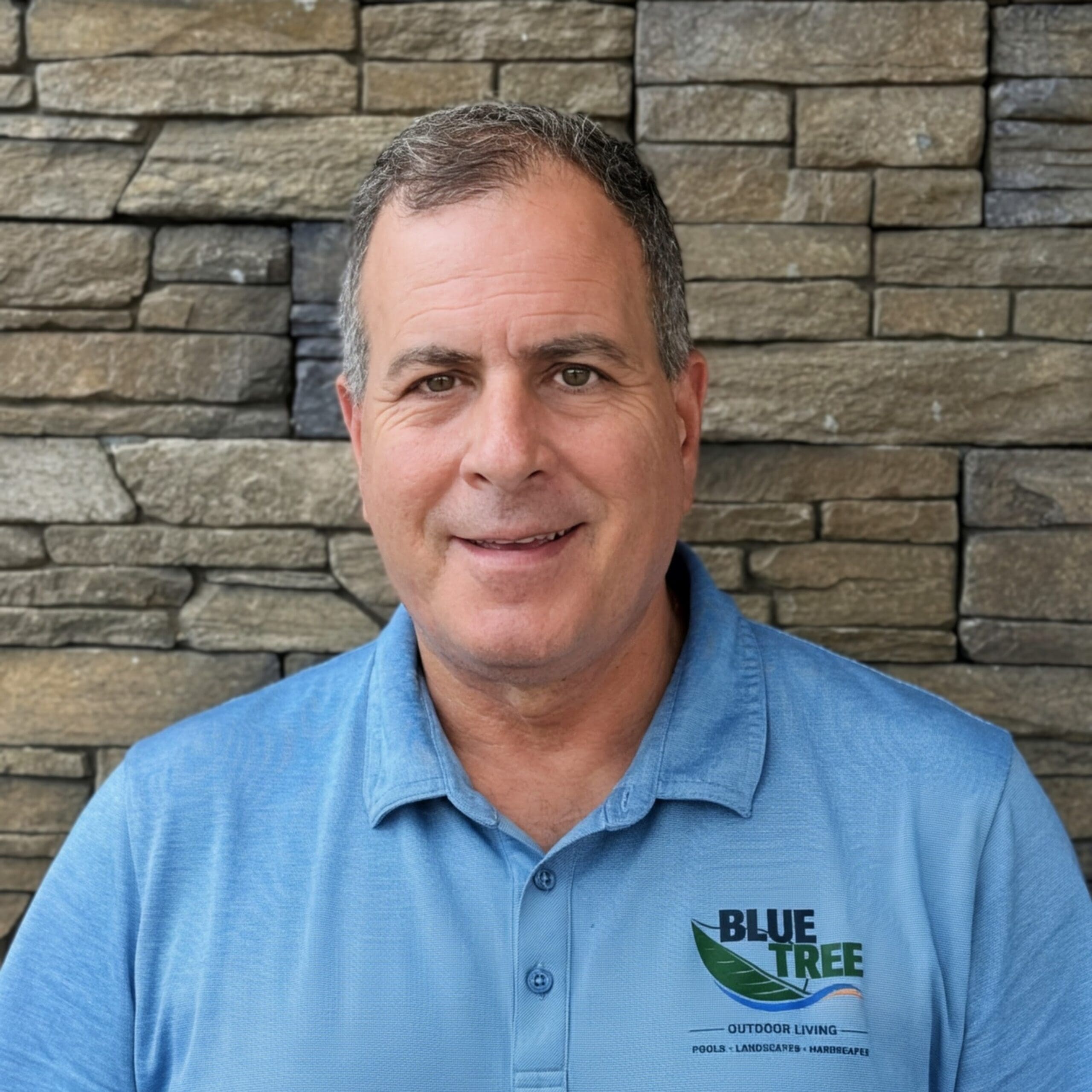
A man in a light blue Blue Title polo shirt stands in front of a stone wall, smiling slightly at the camera.

Jeff Mattiola

Led by Jeff Mattiola, our Owner and President, and Chad Ochnich, our Owner and Vice President, we combine decades of experience and a passion for excellence in every project. At Blue Tree Landscaping, we are dedicated to transforming your outdoor spaces into beautiful, functional environments that you can enjoy for years to come.

Share with your community!

In this article

Ready to Start?

Whether you're dreaming of a resort-style pool, a patio built for gathering, or a landscape that finally feels like you, let's talk.
  • No Obligation
  • Free On-Site Visit
  • Custom Design Proposal
Blue Tree Outdoor Living
  • © 2026 Blue Tree Landscaping, Inc., dba Blue Tree Outdoor Living. All Rights Reserved.
Blue Tree Outdoor Living
Employment Application
Blue Tree Outdoor Living
APPLICANT INFORMATION
Are you a citizen of the United States?
Have you ever worked for this company?
Have you ever convicted of a felony?
If no, are you authorized to work in the U.S.?
EDUCATION
Did you graduate
REFERENCES

Please list three professional references.

REFERENCE #1
REFERENCE #2
REFERENCE #3
PREVIOUS EMPLOYMENT
DISCLAIMER AND SIGNATURE

I certify that my answers are true and complete to the best of my knowledge.

If this application leads to employment, I understand that false or misleading information in my application or interview may result in my release.

Resources and Get in Touch
Custom inground pool built by Blue Tree Outdoor Living
Free Consultation

Designed and built as one project.

Free on-site consultation. Custom design with 3D presentation. One designer guiding you from first visit through warranty support.
Free Consultation
Let's design your outdoor space.
Tell us a bit about you. We'll be in touch within one business day to schedule your free on-site consultation across Southeastern PA
1
Information
2
Services
3
Project
What services are you interested in?*
What is your budget
What is your project timeline?
Consent*

Takes 30 seconds · Your information is private